The party's documented conception of universal sustenance, societal balance, and collective Ijtihad as formulated in its foundational literature.
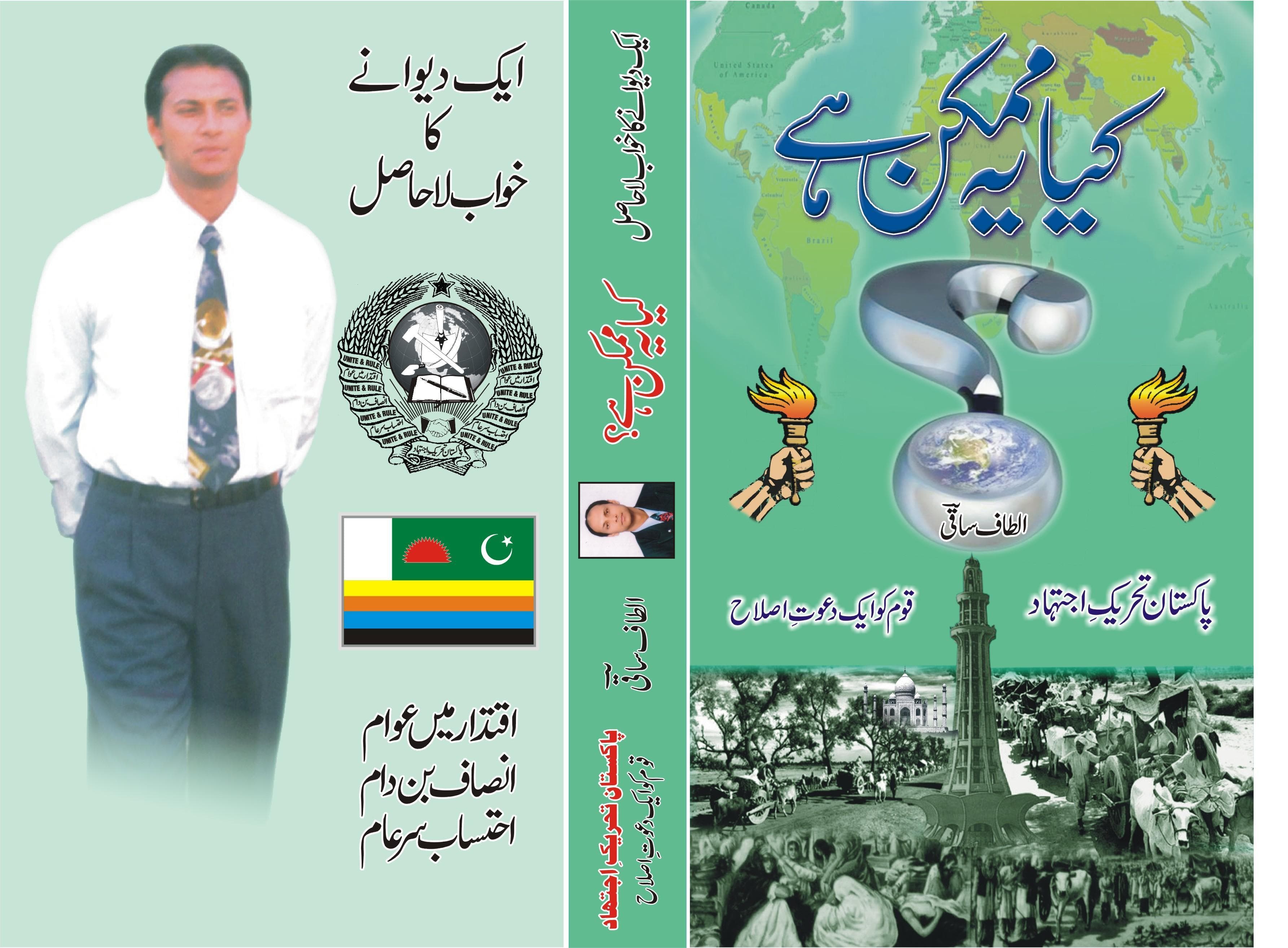
Party Manifesto: pp. 3–5 (Urdu Edition) / pp. 14–20 (English Translation Compilation) • 'Kya Yeh Mumkin Hai?' (IPO Reg. 20697-Copr)
Core Ideological Theses
Documented Foundations of Nizam-e-Rabubiyat
The party's published literature details five primary dimensions of its sustenance and governance doctrine:
01
Party's Documented Conception of Nizam-e-Rabubiyat
Manifesto (English Translation Compilation), p. 15; 'Kya Yeh Mumkin Hai?', IPO Reg. No. 20697-Copr
Universal Sustenance Doctrine (Surah Al-Baqarah 2:261 cited in source)
The party defines its primary mission as the implementation of the Quranic 'Nizam-e-Rabubiyat' (System of Universal Sustenance). According to the text, societal balance requires dividing wealth and guaranteeing access to basic necessities—food, clothing, shelter, health, education, and justice—for every living being, removing extreme economic disparity.
Documented Policy Proposals:
Position that real societal progress depends on establishing an egalitarian order where basic sustenance is unconditionally secured for all citizens.
Proposal that state resources must be organized around public benefit rather than elite privilege.
Assertion that extreme poverty and extreme wealth side-by-side contradict foundational Islamic principles of social justice.
02
Party's Documented Discussion of Political and Social Hierarchy
Manifesto (English Translation Compilation), pp. 15–16
The party's literature analyzes post-colonial social and political hierarchies in Pakistan, arguing that inherited estates, bureaucratic dominance, and military interference have historically prevented the emergence of a pro-people governance structure.
Documented Policy Proposals:
Cites Quaid-e-Azam Muhammad Ali Jinnah's historic address warning against feudal and capitalist exploitation.
Critiques colonial-era land grants awarded for foreign administrative subservience rather than public welfare.
Proposes dismantling political patronage networks and restoring sovereign authority to ordinary working citizens.
03
Party's Documented Principle of Collective Ijtihad
Manifesto (English Translation Compilation), p. 14
Principle of Ijtihad (Collective Deliberation as cited in source)
The manifesto asserts that while Quranic principles remain immutable, their practical application must adapt to evolving human conditions. The party documents collective Ijtihad as an ongoing constitutional and intellectual obligation.
Documented Policy Proposals:
Stipulates that static interpretations must give way to dynamic collective decision-making tailored to contemporary challenges.
Advocates bridging scientific, social, and moral knowledge in national lawmaking.
Affirms that the administrative framework of the party must remain flexible and accountable to public needs.
04
Party's Documented Position on Sovereign Civic Representation
Manifesto (English Translation Compilation), pp. 17–18; Surah An-Nur cited in source
Surah An-Nur ('Every member of the group of the faithful would be an equal sharer of the rule', p. 17)
Citing Surah An-Nur, the manifesto argues that political sovereignty in an Islamic framework belongs collectively to the believers rather than an entrenched dynastic oligarchy. It proposes structured civic participation where the public actively governs and scrutinizes authority.
Documented Policy Proposals:
Rejection of political parties structured as private clubs or family enterprises without internal democratic accountability.
Proposal that local constituency members, rather than central party bosses, must elect candidates for public office.
Mandate for annual internal elections across all party leadership tiers to prevent personality cults.
05
Party's Documented Devolution to Autonomous District Units
Manifesto (English Translation Compilation), pp. 18–19
To address regional polarization and administrative neglect, the party proposes decentralizing administrative authority from centralized provinces down to autonomous district units with directly elected local councils.
Documented Policy Proposals:
Proposal to transform districts into direct administrative units with municipal autonomy.
Elimination of regional and linguistic chauvinism through equitable local resource allocation.
Direct connection between village/ward councils and district administration for immediate public responsiveness.
Authentic Source Excerpts
Direct Passages from Party Literature
Unedited excerpts documenting the party's published positions on Rabubiyat and societal reform:
“The Quranic teachings and decrees will remain the same till the end of days but their meanings and application should remain changing as the time changes. That is, we are all bound to 'Ijtihad' (to make a collective decision).”
“Every member of the group of the faithful would be an equal sharer of the rule.”
“When everyone will have 'justice' free of cost on his own door-step and the resources will be divided affectively, fairly and in a balanced way, the separatist voices will die out.”
Foundational Literary Treatise
Literary Source: 'Kya Yeh Mumkin Hai?'
Kya Yeh Mumkin Hai? (کیا یہ ممکن ہے؟)
600-page ideological treatise on Islamic governance, public benefit, and societal reform
Authored by party founder Sardar Altaf Hussain Anwar, this comprehensive volume presents the extensive theoretical and empirical foundation for Nizam-e-Rabubiyat, egalitarian wealth distribution, and constitutional restructuring. Registered under Intellectual Property Organization (IPO) Copyright No. 20697-Copr dated 26 February 2010.