The Goshwara Devolution Model
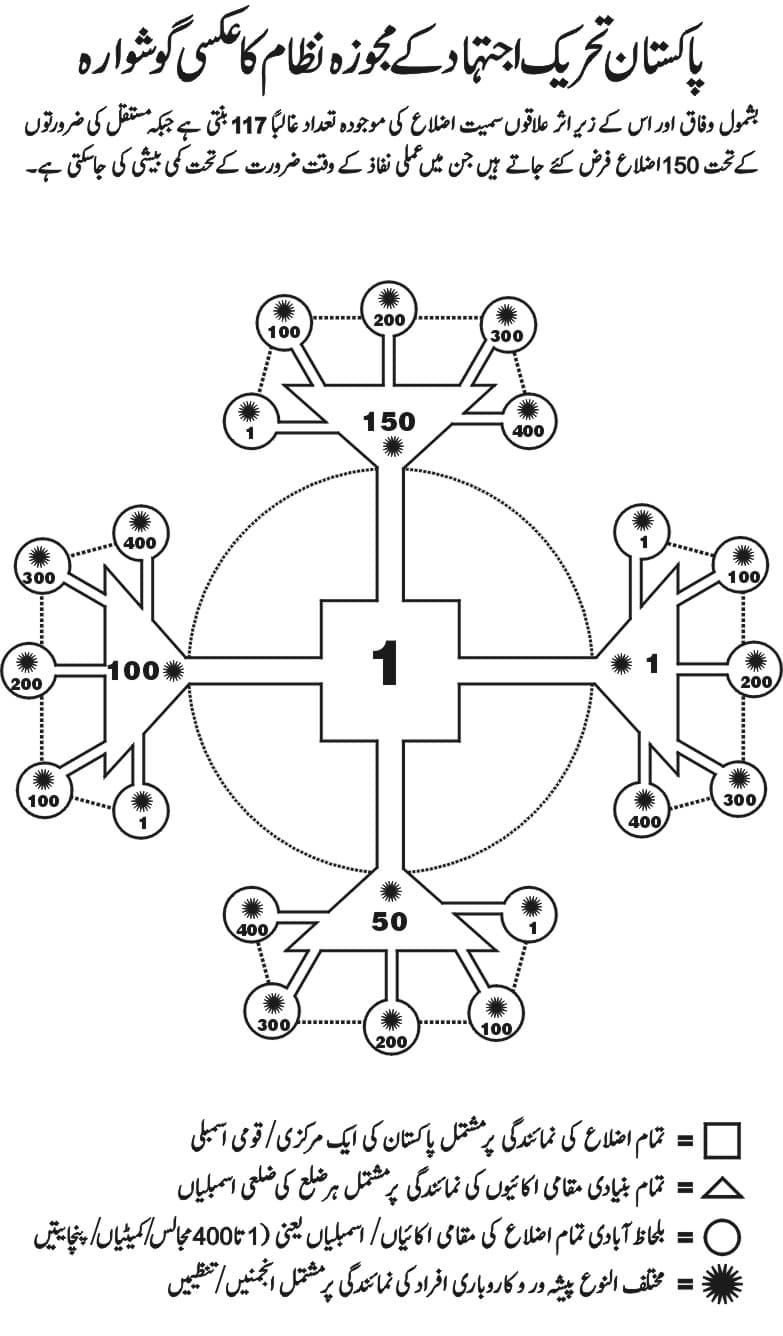
Interactive archival study of the structural devolution schematic from page 50 of the registered Party Constitution booklet.
Constitutional organizational diagram — source record
ARCHIVAL MODEL PROJECTION NOTICE: The numerical figures and geometric layout in this diagram represent the constitutional structural projection documented on page 50 of the registered Party Constitution booklet. They illustrate the proposed systemic devolution model and do not represent a current real-world census of active branch offices.
Interactive High-Resolution Source Diagram
Inspect the authentic handwritten and printed Urdu structural schematic from the registered Constitution booklet
Archival Mathematical Baseline
Verbatim quotation of the projected district parameters recorded on the source diagram
“Documented Baseline on Diagram: "Including the Federation and its administered areas, the current number of districts is approximately 117, while for future permanent governance needs 150 districts are assumed, subject to practical adjustments during implementation."”
In foundational party literature ("Kya Yeh Mumkin Hai?" and the registered Party Constitution), the movement proposes decentralizing Pakistan's top-down administrative machinery. The Goshwara diagram articulates a structured transition from centralized governance to autonomous district and municipal councils, ensuring that public resources are managed by local communities.
Symbol Legend & Devolution Nodes
Direct transcription of the four structural geometric symbols defined on the original diagram
National / Central Assembly of Pakistan
The single supreme national assembly representing delegates from all districts across Pakistan on an equal gender ratio.
District Assemblies (Every District)
Decentralized district parliaments composed of elected presidents and general secretaries from all constituent local neighborhood councils.
Local Councils / Assemblies (Wards & Villages)
Primary neighborhood assemblies established in every village, union council, and municipal ward based on population distribution.
Professional & Business Associations
Institutional integration of occupational guilds, bar associations, medical bodies, artisan groups, and labor unions into local consultative chambers.
Foundational Devolution Precepts
Systemic principles articulated in party treatises Kya Yeh Mumkin Hai? and the Party Constitution
- Egalitarian Devolution ("Unite & Rule"): Power emanates from grassroots municipal panchayats upward rather than elite directives downward.
- Decentralized District Autonomy: Districts function as self-governing administrative units managing local revenue, policing oversight, and free justice courts.
- Multi-Sector Representation: Professional associations, trade unions, agriculturalists, and workers hold formal institutional representation in local assemblies.